Color in Small Spaces: How to Make Any Room Feel Larger
A practical guide to using color in small rooms and studio apartments — spatial perception principles, RAL palette recommendations, and combinations to avoid.
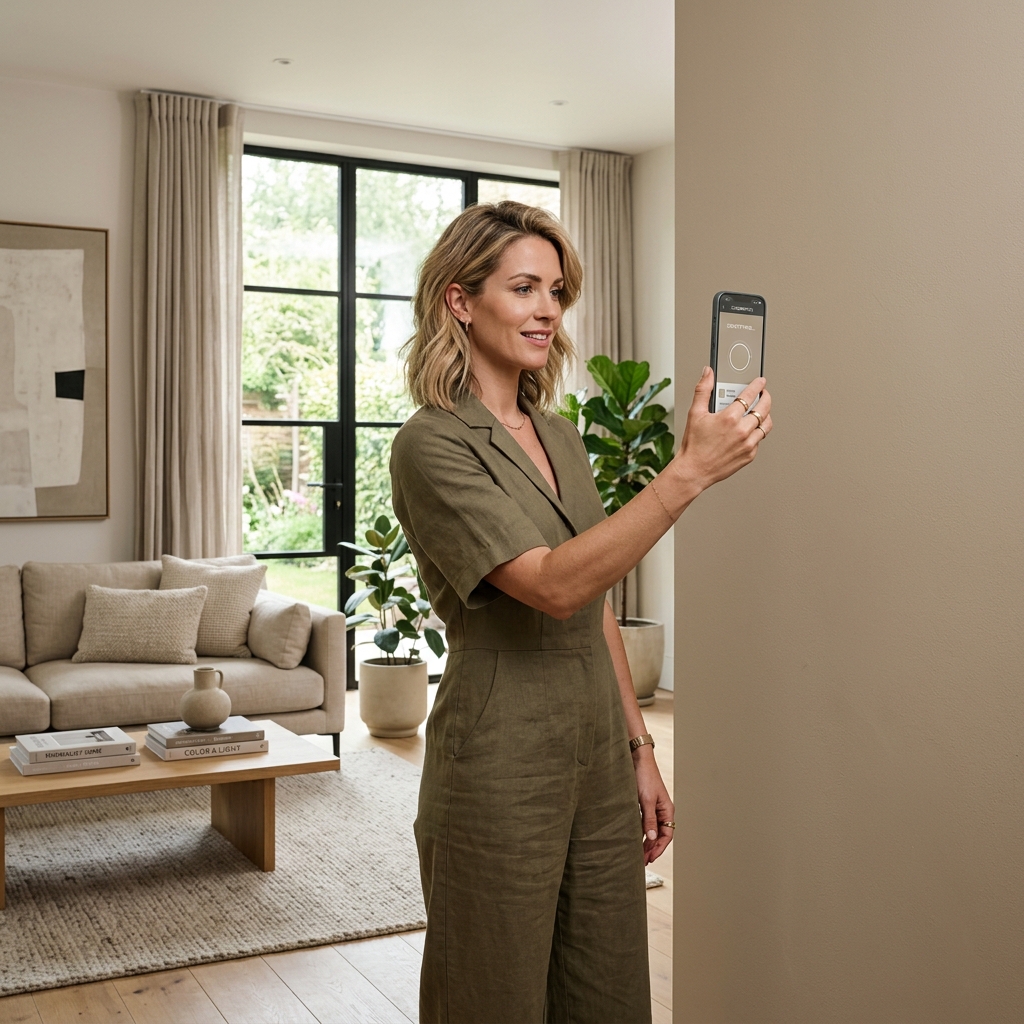
Color in Small Spaces: How to Make Any Room Feel Larger
A small room is not necessarily a problem — it is a design challenge with well-established solutions. Color is one of the most powerful tools available, and unlike structural changes, it is relatively low-cost and entirely reversible. Used strategically, color can make a 30-square-meter studio apartment feel open and airy. Used without thought, it can make the same space feel like a box.
This guide explains the principles behind spatial color perception and translates them into concrete decisions: specific RAL codes, room-by-room strategies, and a clear list of combinations to avoid.
How Color Affects Spatial Perception
Before getting to specific recommendations, it helps to understand the mechanisms at work. Three properties of color have the most direct influence on how we perceive space:
Light Reflectance Value (LRV)
Every color reflects a percentage of the light that hits it. White reflects around 80-90% of light; black reflects around 5%. Higher LRV means more light bounces around the room, making surfaces appear to recede and the space feel larger. Lower LRV means light is absorbed, surfaces appear to advance, and the room feels smaller and more enclosed.
Warm vs. Cool Tones
Warm colors (reds, oranges, yellows) visually advance — they appear closer than they are. Cool colors (blues, greens, soft purples) recede — they appear further away. In a small room, cool tones on the walls push the perceived boundary of the space outward.
Hue Contrast
High contrast between walls, ceiling, and floor draws attention to the boundaries of a room, making them feel close and defined. Low contrast — where walls and ceiling share a similar tone — blurs the boundary and creates a sense of continuous, uninterrupted space.
Strategies to Make Small Rooms Feel Larger
Strategy 1: Use the Same Color on Walls and Ceiling
This is the single most effective spatial trick available. When the ceiling is the same color as the walls (or only one shade lighter), the eye does not register the corner between wall and ceiling as a hard boundary. The room reads as a continuous volume rather than a box. This works best with light to medium tones: RAL 9001 (Cream White), RAL 9010 (Pure White), or soft neutrals like RAL 7047 (Telegrey 4).
Strategy 2: Keep the Floor-to-Wall Transition Light
Dark skirting boards in a small room anchor the floor and visually lower the ceiling. Painting skirting boards the same color as the walls (or using a very light tone like RAL 9001) removes this visual weight and allows the eye to travel upward.
Strategy 3: Use a Single Dominant Color Throughout
In open-plan studio apartments, the temptation is to differentiate zones with different colors. In small spaces, this creates visual clutter and emphasizes the room's limited size. A single, consistent wall color throughout — with variation introduced through textiles, furniture, and accessories — creates a calmer, more expansive reading.
Strategy 4: Use an Accent Wall Strategically
If you want to introduce a deeper or more saturated color, apply it to the wall you face when you enter — the end wall. This draws the eye toward the back of the room and creates a sense of depth. Avoid using accent colors on side walls, which shorten the perceived length of the space.
Strategy 5: Embrace Monochromatic Schemes
A monochromatic approach — using different shades and tones of the same color — reduces contrast and allows the eye to move smoothly around the space without interruption. For example, soft sage walls (RAL 6019) with slightly greener furniture and white trim creates a harmonious scheme that feels spacious without being bland.
Ceiling Color Strategies
The ceiling is often underused in small-space design. Here are three approaches with different effects:
White ceiling, colored walls: The classic approach. Works well when the walls are in medium tones. Use RAL 9010 or RAL 9003 on the ceiling for a clean, fresh result.
Same color on walls and ceiling: As described above, this is the most effective strategy for making a low-ceilinged room feel taller. Best executed in soft, light tones.
Darker ceiling than walls: Counter-intuitively, a darker ceiling can feel intimate and comfortable rather than oppressive — but only when wall colors are kept very light. In a room with RAL 9001 walls, a ceiling in RAL 7044 (Silk Grey) creates a cozy, tent-like atmosphere that works well in bedrooms.
Recommended RAL Palettes for Studio Apartments
The following palettes are designed for small spaces. Each includes wall color, ceiling color, and trim/joinery suggestion.
Palette 1: Warm Minimal
- Walls: RAL 9001 (Cream White)
- Ceiling: RAL 9001 (same)
- Trim: RAL 9010 (Pure White) — very slight contrast
- Effect: Warm, airy, works with wood furniture
Palette 2: Cool and Open
- Walls: RAL 9018 (Papyrus White, cool undertone)
- Ceiling: RAL 9003 (Signal White)
- Trim: RAL 9003
- Effect: Crisp and open, works with black or charcoal accents
Palette 3: Soft Sage
- Walls: RAL 6019 (Pastel Green)
- Ceiling: RAL 9010 (Pure White)
- Trim: RAL 9010
- Effect: Calm, biophilic, appears spacious without feeling clinical
Palette 4: Stone and Clay
- Walls: RAL 7044 (Silk Grey)
- Ceiling: RAL 9001 (Cream White)
- Trim: RAL 9001
- Effect: Sophisticated neutral, suits contemporary furniture
Palette 5: Deep Accent End Wall
- Three walls: RAL 9002 (Grey White)
- End wall: RAL 5014 (Pigeon Blue)
- Ceiling: RAL 9002
- Trim: RAL 9010
- Effect: Creates depth, draws the eye, defines the space
Colors and Combinations to Avoid in Small Spaces
Knowing what not to do is as useful as knowing what works:
Avoid warm, saturated colors on all four walls. RAL 3012, RAL 8024, and similar tones are beautiful but advance visually. In a small room, they create a sense of enclosure that quickly feels overwhelming.
Avoid high-contrast wall-ceiling junctions. Painting a small room with white ceilings and dark walls emphasizes the room's proportions unfavorably, making it feel lower and tighter.
Avoid using many different colors in one small space. Each additional color introduces a boundary — a point where the eye stops and registers a change. In a small room, multiple boundaries make the space feel fragmented.
Avoid very dark floors with very light walls in a low-ceilinged room. This creates a heavy base that visually compresses the vertical dimension of the room.
Avoid glossy finishes on walls with imperfections. In small spaces, walls are close to the viewer and imperfections are visible. A matte or eggshell finish is more forgiving and creates a softer, receding quality.
Using WhtColor to Find Small-Space Colors from Inspiration Images
One of the most practical applications for a tool like WhtColor in small-space design is extracting colors from inspiration photos. Designers and homeowners frequently save images of spaces they respond to — often small apartments, hotel rooms, or design magazine features — without knowing what specific colors were used.
Uploading that image to whtcolor.com returns the exact HEX, RGB, and RAL codes present in the photograph. If a particular shade of warm grey or soft green is what you want to replicate, you have the RAL code in seconds rather than spending an afternoon comparing paint chips at a store.
This is especially useful when working with subtle, light colors where the distinction between RAL 9001, RAL 9010, and RAL 1013 matters significantly to the final result.
Summary
| Principle | Recommendation | |---|---| | Maximize LRV | Use light colors with high reflectance on walls and ceilings | | Reduce boundary contrast | Match or closely relate wall and ceiling colors | | Use cool tones to expand | Blues, soft greens, and cool whites recede visually | | Accent walls | Apply to the end wall only, not side walls | | Avoid | Multiple colors, high contrast at junctions, all-over warm saturates |
Small spaces reward careful, deliberate color decisions more than any other type of room. The investment in getting it right — rather than defaulting to white and hoping — consistently produces environments that feel larger, calmer, and more considered.
Extract the Exact Color from Any Inspiration Image
Find the perfect small-space palette by uploading your saved photos to WhtColor. Get HEX, RGB, and RAL codes instantly.
Find Your RAL Code